In-Laws & Families
Cross-cultural marriage: what surprises people is not the food
Couples prepare for the visible differences and get caught by the invisible ones. What actually needs negotiating when two cultures share a household.

Most explanations of a cross-cultural marriage stop at the point where it starts to matter. This one carries on.
The short version
- Visible differences get discussed early; assumptions about obligation and directness do not.
- Legal and immigration questions vary enormously and need proper local advice.
- Neither partner should be expected to assimilate by default, and the arrangement works better when it is stated.
The visible differences are the easy ones
Food, language, dress and festivals are obvious, get discussed early, and are usually enjoyable to negotiate rather than difficult. The differences that cause trouble are the invisible ones: assumptions about obligation, directness, privacy, hierarchy and what is owed to a family. These operate below the level of opinion, so each partner experiences their own version as simply how people behave.
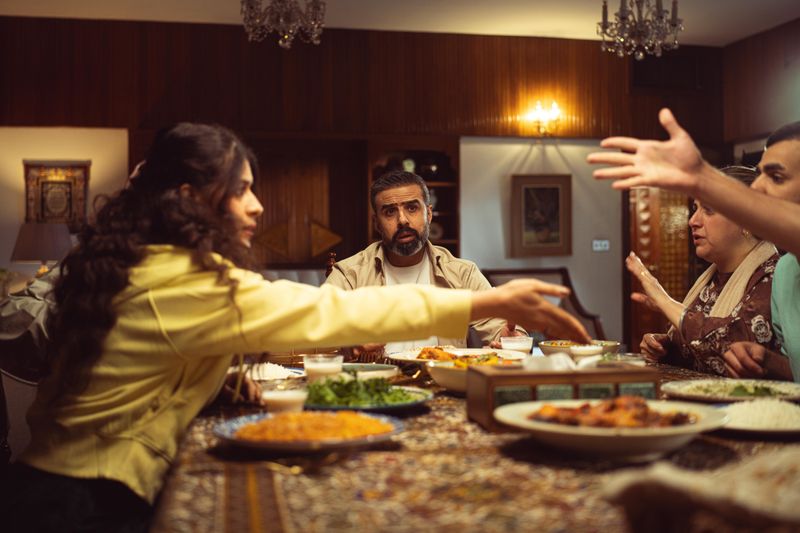
A couple can agree on politics, religion and money and still collide on how much notice a visit requires or whether disagreement in front of parents is acceptable. Naming these as cultural rather than personal is what keeps the conversation from becoming an accusation about character.
Obligation and the family unit
Cultures differ sharply on where the boundary of the household sits, and whether decisions belong to a couple or to a wider family. One partner may consider consulting parents about a job move to be basic respect, while the other considers it a loss of autonomy. Both positions are internally coherent, and neither can be argued into the other by appeals to reasonableness.
Between two sets of parents, the workable approach is deciding case by case which decisions the couple makes alone, and stating that as a rule rather than negotiating each time. This is the single most common source of serious conflict in cross-cultural marriages and deserves an explicit conversation early.
Directness and conflict style
Some cultures treat direct disagreement as honesty and others treat it as aggression, and the same sentence lands very differently across that line. Indirect communication is not evasiveness, and directness is not rudeness, but each reliably reads as the other from the wrong side. Couples often spend the first year misreading tone entirely, concluding that one is harsh and the other is uncommunicative.
Between two sets of parents, saying explicitly how you were taught to disagree, and asking the same question, resolves a surprising amount of this. Extended family interactions magnify the effect, since a partner's directness towards their in-laws may be received far worse than they intend.
Language and who is excluded
Where one partner does not speak the family's language, they spend gatherings partially excluded, and that exclusion is exhausting rather than merely awkward. The obligation to translate falls on the bilingual partner, which turns family events into work for them and dependence for the other. Agreeing a practical arrangement, such as periodic summaries or some conversation in a shared language, is a reasonable request rather than an imposition.
Said out loud early, learning even limited amounts of the language changes the relationship with the family disproportionately, and the effort is noticed.
Where children are involved, decisions about which languages they learn are worth making deliberately rather than by drift.
Paperwork, residence and law
Cross-border marriages involve visas, residence permits, recognition of the marriage itself, and sometimes different treatment of property and inheritance. Rules vary enormously between countries and change frequently, so anything you read generally should be confirmed against current local sources.
Where one partner's status depends on the relationship, that dependence is a real power asymmetry that should be acknowledged rather than ignored. Keep documents, dates and renewals in a shared calendar, since immigration deadlines carry consequences that other paperwork does not. Take professional advice for anything involving residence, citizenship, property in two countries or the recognition of a marriage across jurisdictions.
Neither partner assimilates by default
The common drift is towards the culture of whichever country you live in, or whichever family is closer, without anyone choosing it. Stating what each of you wants to keep, practise or pass on turns that drift into a decision. It is entirely possible for a household to run on two sets of practices, and many do so comfortably once the arrangements are explicit.
Pressure to convert, adopt a name, or abandon a practice should be discussed between the couple rather than settled by whichever family applies more pressure. Cross-cultural marriages are ordinary rather than exceptional, and the work involved is negotiation rather than a problem to be overcome.
The takeaway
The differences you discussed before the wedding are rarely the ones that matter; the ones about obligation and directness are, so raise those on purpose.
Being known is worth more than being agreed with.
Questions readers ask
What causes the most conflict in cross-cultural marriages?
Usually assumptions about family obligation and decision-making authority, rather than food, language or religion. Those assumptions are invisible until they collide.
How do we handle family gatherings when I do not speak the language?
Ask for a practical arrangement rather than enduring it. Periodic summaries, some conversation in a shared language, and learning even a little all change the experience substantially.
Also by Aisha Kureshi
- The messenger rule: each of you handles your own parentsIn-Laws & Families
- The kitchen is where two childhoods argueRunning a Home
- A fair split when your working hours are not equalRunning a Home
- A loan from a relative is never only a loanIn-Laws & Families