Running a Home
If one of you were away for a fortnight, could the other run the house?
Most households quietly become dependent on one person knowing where things are. A test for that dependency, and a short list of what to write down before it is discovered during an emergency.
Everything here earned its place by changing an outcome. Nothing about household knowledge and single points of failure is included to round the number up.
What matters most
- Specialisation is efficient and creates a single point of failure in the same movement.
- The knowledge that matters is location and process, not skill.
- A one-page household file solves most of it and takes an hour to write.
Efficiency creates dependency
Households specialise because it is faster, so one person handles the boiler, the landlord and the bank while the other handles food, the car and the insurance. That is a sensible division and it produces two people who each hold knowledge the other cannot reconstruct quickly. The dependency stays invisible until one partner is ill, travelling or otherwise unavailable, which is precisely the worst moment to discover it.
The problem is rarely skill, since either partner could handle any of these tasks given the information. What is missing is location and process: which account, which provider, which reference number and what usually happens next.
Running the test
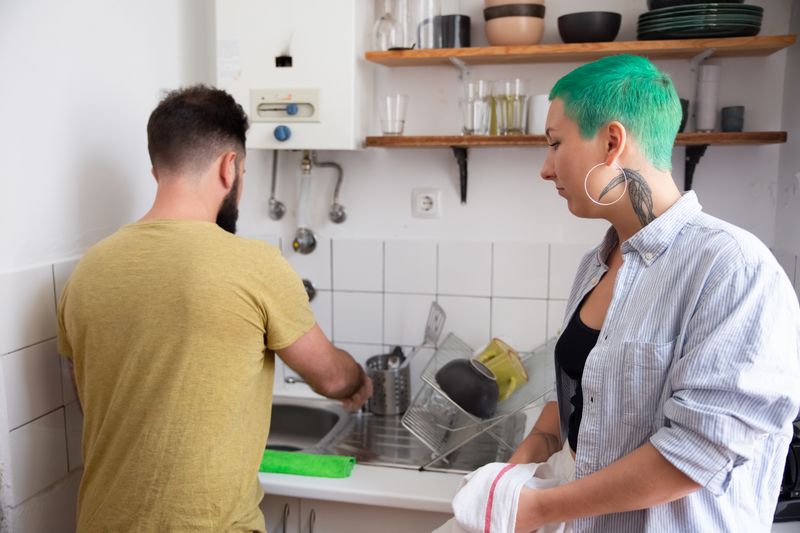
Pick a week and have each partner attempt one of the other's routine tasks, using only what they can find without asking. The failures are informative and specific, usually a login, an account number, a supplier name or the fact that a payment is on a card nobody else can see. This is quicker and more accurate than trying to imagine what the other person knows, which reliably underestimates the gap.
Sharing a household, doing it as an exercise, rather than during a genuine crisis, removes the pressure that makes the gap expensive. Most couples find between five and ten items that only one of them can locate, which is a manageable list to fix.
The one-page household file
Write a single document listing utilities and account numbers, the landlord or management company, insurance policies, the bank accounts and standing payments. Add the practical items that are never written down, including where the stopcock is, which fuse controls what, and the boiler's service history. Include a short process note for anything with a rhythm, such as when rent leaves, when the car is due and which bills arrive quarterly.
When the same row comes back, keep it somewhere both partners can reach without the other's device, and review it once a year alongside the insurance sheet. An hour spent on this returns itself the first time either of you is away, ill or dealing with something urgent.
Digital access without sharing everything
Accounts, passwords and two-factor authentication are the most common blocking point, and the most common reason one partner cannot act. A shared password manager vault for household accounts, kept separate from each person's private vault, solves this without merging anyone's personal logins.
Two-factor codes tied to a single phone are a genuine failure point, so household accounts should have a recovery method both of you can use. Privacy and access are not in conflict here, since the household file needs the household's accounts rather than anyone's personal correspondence. Keeping some accounts entirely private is normal and does not undermine the arrangement, provided the household ones are covered.
The medical and legal edge
In an emergency, hospitals and institutions may need information neither partner routinely carries, including medication, allergies, conditions and existing arrangements. A short medical note for each partner, agreed and stored with the household file, covers this and takes minutes to write. Many countries also have a formal document allowing one person to act for another in health or financial matters if they cannot act for themselves.
Whether such an instrument is appropriate is a legal question that varies by jurisdiction and is worth asking a qualified professional locally. None of this is morbid preparation; it is the same category of maintenance as knowing where the fuse box is.
Two people can both be reasonable and still want incompatible things.
Rotating rather than documenting everything
Documentation solves access and does not solve familiarity, since a person following instructions for an unfamiliar system is still slow and uncertain. Rotating a few responsibilities every year or two keeps both partners in genuine contact with how the household runs.
Between two sets of parents, it also prevents the quieter version of the problem, where one partner's expertise gradually becomes the reason they keep every task in that domain. The rotation does not need to be complete, and swapping two items a year is enough to keep both people competent. The test for whether it is working is unchanged: could the other one run the house for a fortnight without a search.
Everything above, in order of what to do first
- Efficiency creates dependency. Households specialise because it is faster, so one person handles the boiler, the landlord and the bank while the other handles food, the car and the insurance.
- Running the test. Pick a week and have each partner attempt one of the other's routine tasks, using only what they can find without asking.
- The one-page household file. Write a single document listing utilities and account numbers, the landlord or management company, insurance policies, the bank accounts and standing payments.
- Digital access without sharing everything. Accounts, passwords and two-factor authentication are the most common blocking point, and the most common reason one partner cannot act.
- The medical and legal edge. In an emergency, hospitals and institutions may need information neither partner routinely carries, including medication, allergies, conditions and existing arrangements.
- Rotating rather than documenting everything. Documentation solves access and does not solve familiarity, since a person following instructions for an unfamiliar system is still slow and uncertain.
The takeaway
Run the swap test for a week, write the one-page household file, put household logins in a shared vault, and rotate two responsibilities a year so both of you stay competent.
Divide the work by who minds it least, then check the arrangement again in a year.
Questions readers ask
Is this not just paperwork we will never look at?
The point is that it exists on the day it is needed. Households find five to ten items only one person can locate, and those are exactly the items that stall everything during an emergency.
We do not want to share all our passwords.
You do not need to. A shared vault for household accounts, kept separate from each person's private one, covers what matters. Personal accounts can stay personal.
Also by Rohan Fernandes
- The first shared budget is a values conversation wearing a spreadsheetMoney Together
- Invisible labour is a noticing problem before it is a fairness problemRunning a Home
- An emergency fund is a document about what you are afraid ofMoney Together
- The nominations nobody updates: insurance, pensions and next of kinMoney Together